The Question
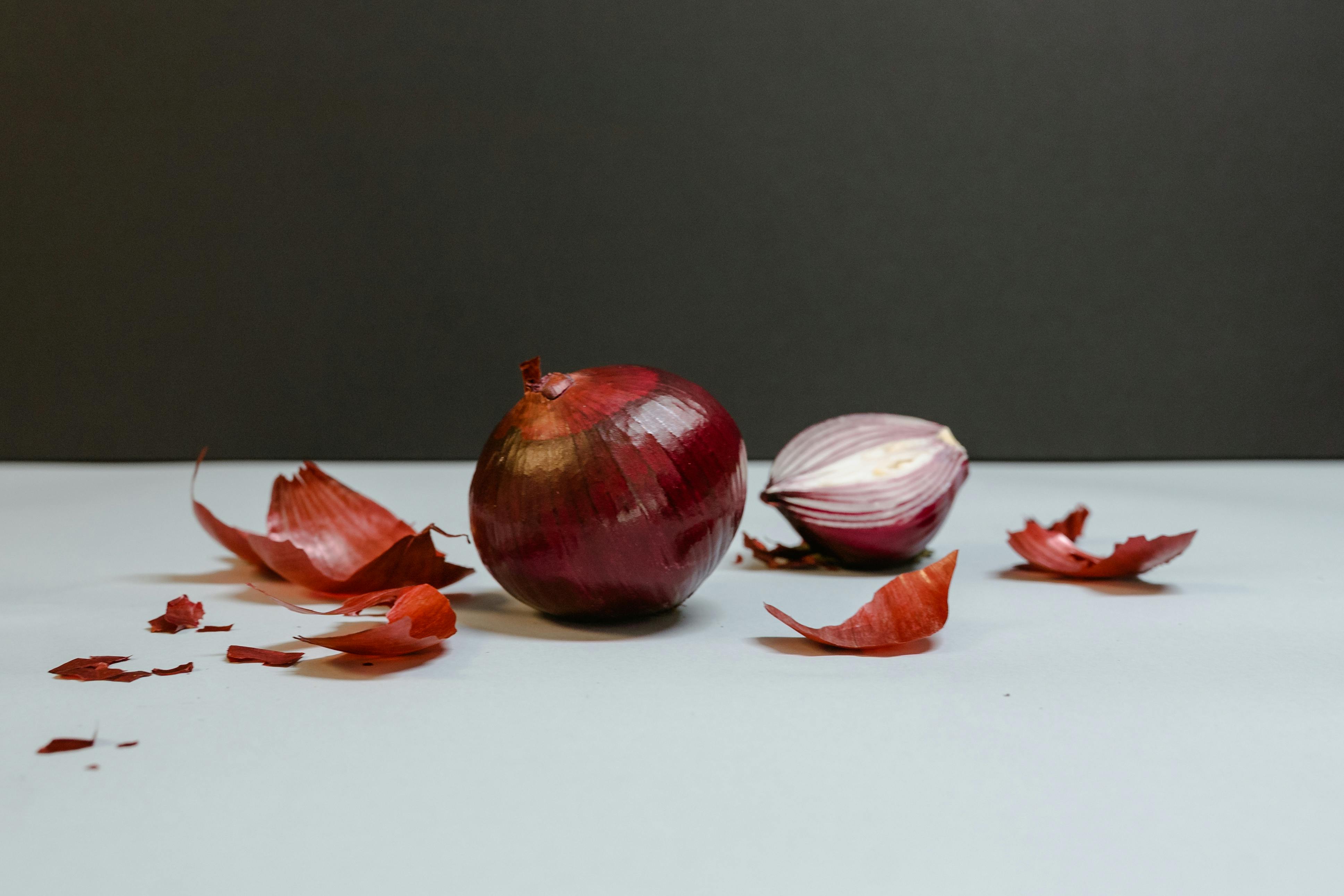
Why is it that a simple kitchen task like chopping an onion can lead to a flood of tears? Is it an emotional response, or is there a sophisticated chemical warfare happening on your cutting board? Understanding the biology of the onion reveals a fascinating survival mechanism that has evolved over millions of years.
Detailed Explanation
The tears you shed when cutting an onion are the result of a complex chemical chain reaction designed to protect the plant from being eaten. Onions are bulbs that grow underground, where they are constant targets for hungry rodents and insects. To defend themselves, onions have evolved a unique chemical weapon system. While the onion is intact, its defensive chemicals are kept separate in different parts of the cell. However, when you slice into an onion with a knife, you rupture these cells and cause the previously separated components to mix. Specifically, enzymes called alliinases come into contact with amino acid sulfoxides. This initial reaction creates sulfenic acids. But the process doesn't stop there. Another enzyme, known as the lachrymatory factor synthase, then acts on these sulfenic acids to convert them into a volatile gas called propanethial S-oxide. This gas is highly unstable and quickly wafts upward toward your face. When the propanethial S-oxide reaches the moisture that naturally coats your eyes, it undergoes another transformation: it reacts with the water to form a very mild solution of sulfuric acid. Your eyes are incredibly sensitive organs, and the presence of even a tiny amount of acid triggers a sensory alarm. Your brain receives a distress signal from the nerves in your cornea and immediately instructs your lachrymatory glands to produce a flood of tears. These aren't emotional tears; they are 'reflex tears' designed specifically to dilute the acid and flush the irritant away from the delicate surface of your eye. It is a brilliant, if annoying, example of plant chemistry in action.
Going Deeper
The intensity of the reaction often depends on the type of onion and how it was grown. Onions absorb sulfur from the soil, which they use to build their chemical defenses. Therefore, onions grown in sulfur-rich soil tend to be much more pungent and 'tear-inducing' than those grown in low-sulfur environments. This is why sweet onions, which are grown in specific regions with low-sulfur soil, are much easier on the eyes. From a biological perspective, the onion doesn't 'want' to make you cry; it wants to make the experience of eating it so unpleasant for a burrowing animal that the creature stops chewing and leaves the bulb alone. Human beings are the only creatures that have learned to enjoy the flavor of this chemical defense system enough to endure the stinging eyes. Interestingly, the chemical propanethial S-oxide is also responsible for the characteristic sharp smell of a freshly cut onion. Once the onion is cooked, the heat destroys the enzymes and neutralizes the gas-producing reaction, which is why your eyes only sting during the preparation phase and not while you are eating the finished dish. Scientists have even attempted to create 'tearless' onions by using gene-silencing technology to disable the lachrymatory factor synthase enzyme, allowing the onion to retain its flavor without the gas.
Did You Know?
There are several practical ways to minimize the 'onion cry' based on this science. Chilling the onion in the refrigerator for 30 minutes before cutting is highly effective because cold temperatures slow down the speed of the chemical reactions and reduce the volatility of the gas. Using a very sharp knife is also crucial; a sharp blade slices through the cells cleanly, whereas a dull knife crushes them, releasing significantly more enzymes and gas. Some chefs recommend cutting the onion under a kitchen vent or near a stream of running water, which can help draw the gas away or dissolve it before it reaches your eyes. You might have heard of 'old wives' tales' like holding a piece of bread in your mouth or wearing goggles; while goggles actually work by providing a physical barrier, most other tricks are ineffective because they don't address the underlying chemistry of the sulfuric acid formation.