
nature
Why Is the Sky Blue?
Discover the colorful physics of Rayleigh scattering and why our atmosphere paints a blue canopy above our heads every clear day.
Read ArticleWe provide clear, concise, and scientifically accurate explanations for the most common mysteries of everyday life.
Discover the colorful physics of Rayleigh scattering and why our atmosphere paints a blue canopy above our heads every clear day.
Read Article
The incredible journey from flower nectar to golden syrup.
Read Article




The chemical battle between your knife and an onion's sophisticated defense mechanism that has evolved over millions of years.
Read Article
Learn why water is one of the few substances on Earth that becomes less dense when it freezes, defying the typical rules of physics.
Read Article
Exploring the brain-cooling theories and social bonding mechanisms behind the mysterious and contagious yawn.
Read Article
The science of electromagnetic waves, polar molecules, and billions of vibrations that turn cold leftovers into a hot meal.
Read Article
The clever 'split-personality' molecules that bridge the gap between water and grease, trapping dirt in microscopic spheres.
Read Article
Investigating the brain's nightly 'file organization,' emotional processing, and the strange narratives it creates while we sleep.
Read Article
Fire is not a substance but a self-sustaining chemical reaction. Discover what is really happening inside those dancing flames and why they produce light and heat.
Read Article
The science of freezing point depression and why road crews spread salt on icy roads every winter.
Read Article
The electrochemical process that costs the global economy hundreds of billions of dollars every year.
Read Article
A classic kitchen experiment that reveals the fundamentals of acid-base chemistry.
Read Article
Bacteria, plant oils, and ozone combine to create one of the most universally loved scents in the world.
Read Article
Olbers' Paradox: if the universe is infinite and full of stars, why isn't the night sky blazing with light? The answer reveals the age of the universe itself.
Read Article
The quantum mechanical phenomenon rooted in electron spin that shapes everything from your fridge door to MRI machines.
Read Article
Sound moves four times faster in water than in air. The reason reveals how the stiffness of a medium determines the speed of a wave.
Read Article
From Newton's mysterious "action at a distance" to Einstein's revolutionary idea that gravity is the curvature of spacetime itself.
Read Article
A vestigial reflex from our furry ancestors that still fires when we are cold, frightened, or moved by a piece of music.
Read Article
Laughter is primarily a social signal, not a response to humor. The neuroscience of why it feels so good and why it is contagious.
Read Article
Memories are not stored like files on a hard drive. They are distributed patterns of neural connections that are rebuilt every time you remember.
Read Article
Telomeres, DNA damage, and senescent cells—the multiple biological mechanisms that cause our bodies to deteriorate over time.
Read Article
Your body is under constant attack from billions of pathogens. Here is how your immune system identifies and destroys threats while leaving your own cells unharmed.
Read Article
Deep inside the Earth, pressure and heat build until molten rock forces its way to the surface in one of nature's most spectacular displays of power.
Read Article
Tectonic plates lock together for centuries, storing enormous energy, until they suddenly slip—releasing it all in seconds.
Read Article
Chlorophyll absorbs red and blue light but reflects green—and the reason why reveals a deep mystery about the evolution of photosynthesis.
Read Article
The Moon's gravity doesn't just pull the ocean toward it—it stretches the entire Earth, creating two tidal bulges on opposite sides of the planet.
Read Article
Space is not truly empty—but it is extraordinarily close. The reason reveals the large-scale structure of the universe and the nature of quantum reality.
Read Article
The Moon doesn't actually change shape. The phases are simply our changing viewing angle of the half that is always illuminated by the Sun.
Read Article
Glass is solid, yet transparent. The quantum mechanical reason why photons pass through glass but are blocked by wood or metal.
Read Article
Sleep is not passive rest—it is the brain's cleaning cycle, memory consolidation system, and physical repair workshop all running simultaneously.
Read Article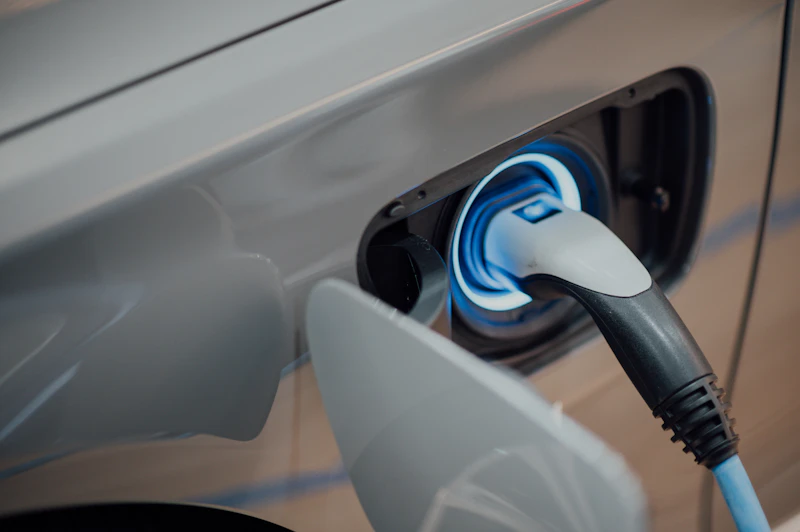
A battery converts chemical energy directly into electrical energy through a redox reaction. The elegant chemistry that powers the modern world.
Read Article
Data broken into packets, routed through undersea cables, and reassembled in milliseconds. The remarkable engineering behind every web page you visit.
Read Article
Vaccines train your immune system to recognize a pathogen before you ever encounter it—exploiting the body's remarkable ability to learn and remember.
Read Article
Satellites, atomic clocks, and Einstein's theory of relativity combine to tell you exactly where you are on Earth, to within a few meters.
Read Article