The Question
How do tiny insects transform simple flower nectar into the thick, golden, and everlasting substance we know as honey? The process is a masterpiece of biological engineering, teamwork, and chemical transformation that involves thousands of bees working in perfect harmony.
Detailed Explanation
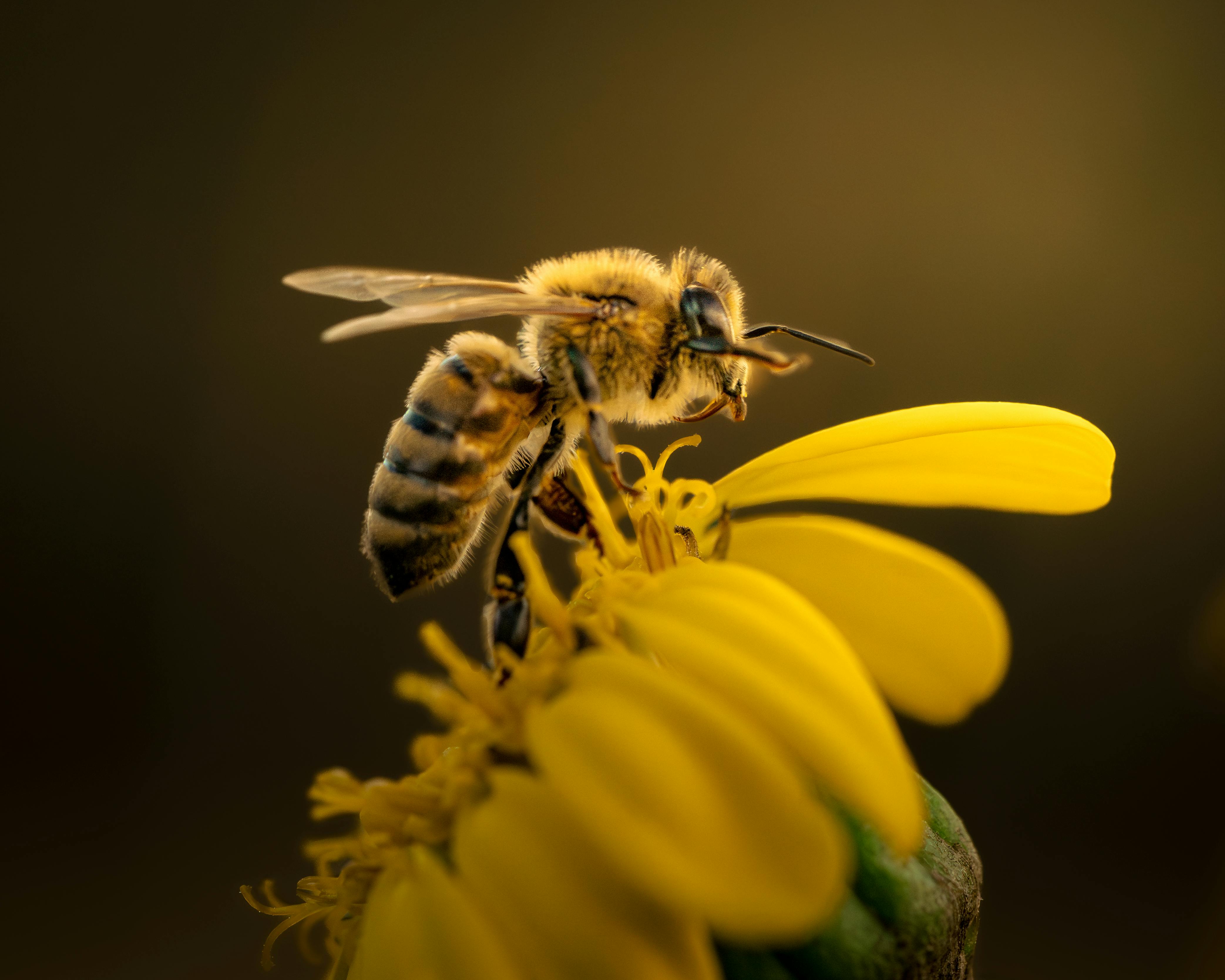
The journey of honey begins in the fields, where forager bees visit hundreds of flowers to collect nectar. Nectar is mostly water (about 80%) mixed with complex sugars like sucrose. A bee uses its long, straw-like tongue, called a proboscis, to suck the nectar into its 'honey stomach' or crop. This is a separate organ from its digestive stomach, specifically designed for storage. Inside the honey stomach, the transformation begins. The bee's body adds an enzyme called invertase, which starts breaking down the complex sucrose into simpler sugars: glucose and fructose. When the forager bee returns to the hive, it regurgitates the nectar and passes it to 'house bees.' These bees engage in a process of repeated regurgitation and ingestion, passing the nectar from mouth to mouth for about 20 to 30 minutes. Each time the nectar is handled, more enzymes are added, further breaking down the sugars and beginning to reduce the water content. Once the chemical makeup is correct, the bees deposit the still-watery mixture into the hexagonal cells of the honeycomb. But this isn't honey yet—it's still too liquid. To thicken it, the bees work together to create a breeze by rapidly flapping their wings over the open cells. This forced evaporation removes the excess moisture until the water content drops below 18%. This low moisture level, combined with the acidic pH created by the enzymes, makes the honey an inhospitable environment for bacteria or yeast. Finally, once the honey is perfectly thickened, the bees seal the cell with a wax cap, preserving it indefinitely as a food source for the winter.
Going Deeper
The sheer scale of effort required to produce honey is staggering. To produce just one pound of honey, a colony of bees must visit approximately two million flowers and fly a cumulative distance of over 50,000 miles—roughly twice the circumference of the Earth. A single worker bee will only produce about one-twelfth of a teaspoon of honey in her entire lifetime. Honey is the only food source created by insects that is consumed by humans, and its unique chemistry makes it one of the few foods that never spoils. Archaeologists have found pots of honey in ancient Egyptian tombs that are over 3,000 years old and still perfectly edible. This longevity is due to several factors: the extremely low water content, the high acidity, and the presence of hydrogen peroxide, which is a byproduct of the enzyme glucose oxidase that bees add to the nectar. This enzyme breaks down glucose into gluconic acid and hydrogen peroxide, providing a natural antibacterial defense for the hive's food supply. Different types of honey, such as clover, manuka, or wildflower, get their distinct colors and flavors from the specific types of nectar the bees collect. Darker honeys generally have higher mineral content and stronger antioxidant properties. The hive itself acts as a sophisticated temperature-controlled factory, where the bees maintain a constant temperature of around 95 degrees Fahrenheit (35 degrees Celsius) to ensure the enzymes work correctly and the evaporation process is efficient.
Did You Know?
Consider the role of the 'Waggle Dance' in honey production. When a scout bee finds a rich source of nectar, she returns to the hive and performs a precise dance that tells other forager bees exactly where the flowers are located in relation to the sun and the distance from the hive. This social communication allows the colony to maximize its efficiency and collect huge amounts of nectar during the short blooming seasons. Another example of bee ingenuity is the production of beeswax itself. To build the honeycomb cells, younger bees consume honey and convert the sugar into wax through special glands on their abdomens. It takes about eight pounds of honey for the bees to produce just one pound of wax, showing just how precious every drop of honey is to the survival of the colony. This intricate cycle of collection, transformation, and storage is a testament to the incredible complexity of the natural world.