The Question
How does a silent, visual flash of lightning result in the thunderous, rolling boom that can shake the ground and rattle windows? Thunder is one of the most powerful sounds in nature, and its cause is a violent physical reaction in the air itself, triggered by extreme temperatures.
Detailed Explanation
Thunder is the sound caused by lightning. To understand how it forms, we first have to look at the immense energy of a lightning bolt. A typical bolt of lightning is only about an inch in diameter, but it carries hundreds of millions of volts of electricity. As this massive electrical discharge surges through the air, it encounters resistance. This resistance converts the electrical energy into heat, and the temperature of the air around the lightning channel can reach staggering levels—up to 30,000 degrees Celsius (54,000 degrees Fahrenheit). This is approximately five times hotter than the surface of the sun. When air is heated this intensely and this quickly, it behaves explosively. In a fraction of a second, the superheated air expands outward with incredible force. This sudden expansion creates a supersonic shock wave that travels through the atmosphere. As the shock wave moves away from the lightning channel, it slows down and transforms into the sound wave that we hear as thunder. The initial 'crack' or 'clap' of thunder is the sound of the shock wave from the lightning closest to you, while the long, rumbling sound that follows is the sound of the shock wave reaching your ears from more distant parts of the same lightning bolt.
Going Deeper
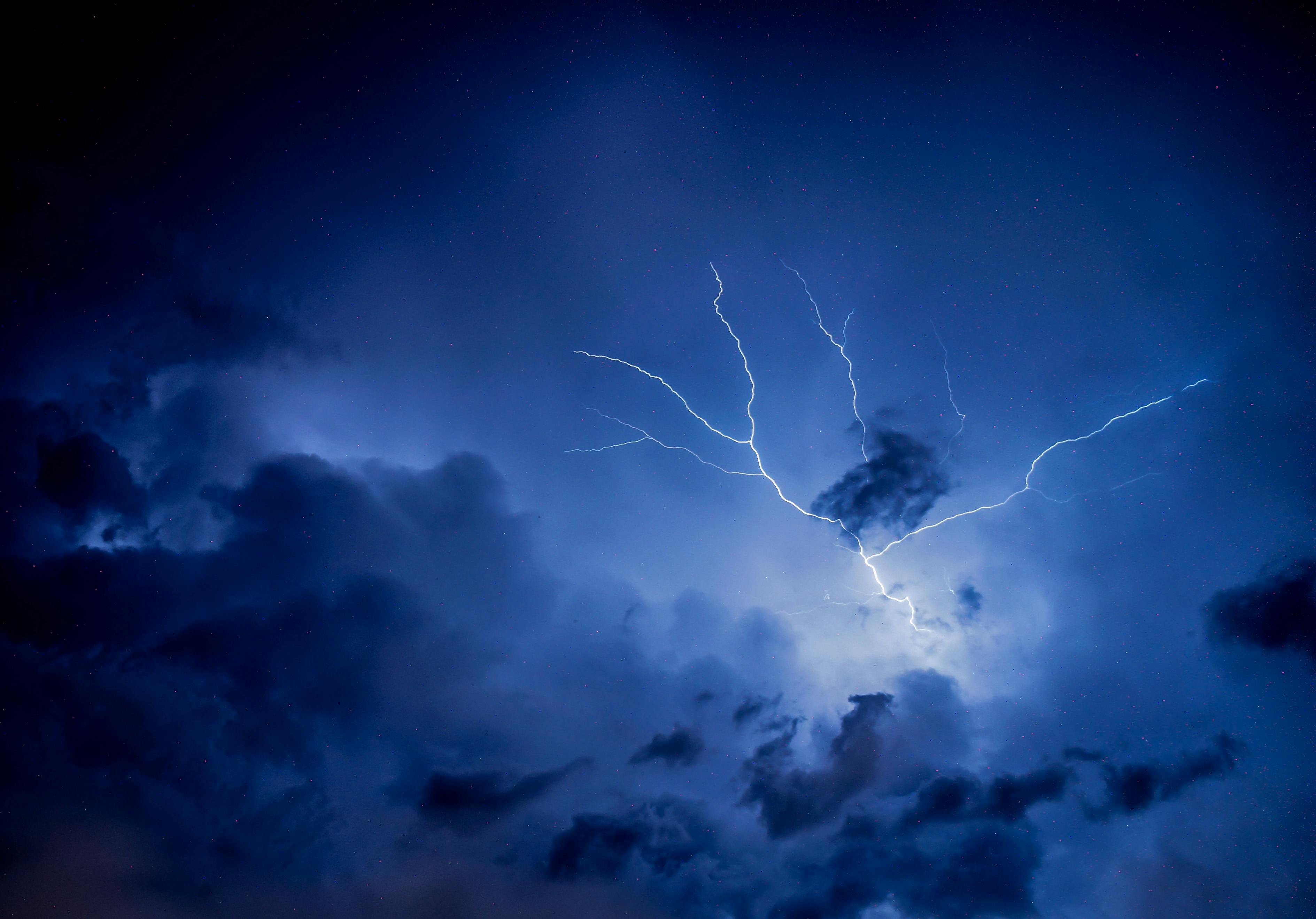
The variety of sounds we hear during a storm—from sharp cracks to low, rolling rumbles—is due to the shape of the lightning and the properties of the atmosphere. Lightning bolts are rarely straight lines; they are jagged, branching structures that can be several miles long. Because sound travels at a relatively slow speed (about 1,100 feet per second, or 340 meters per second), the sound from the top of a long lightning bolt takes much longer to reach your ears than the sound from the bottom. This time delay is what creates the 'rolling' effect of thunder. Furthermore, sound waves can reflect off buildings, mountains, and even different layers of air, creating echoes that prolong the sound. You can actually use the speed of sound to estimate how far away a storm is. Because light travels almost instantaneously (186,000 miles per second), you see the lightning the moment it happens. By counting the seconds between the flash and the boom and dividing by five, you can calculate the distance to the lightning in miles (or divide by three for kilometers). If the thunder follows the lightning immediately, the strike was extremely close. If you see lightning but hear no thunder, it means the strike was more than 10 to 15 miles away, and the sound waves have been absorbed or refracted by the atmosphere before they could reach you. This is often referred to as 'heat lightning,' though it's actually just normal lightning that is too far away to be heard.
Did You Know?
Imagine a balloon popping. The air inside is under pressure, and when the rubber breaks, that air expands suddenly, creating a small shock wave that we hear as a 'pop.' Now, imagine that same process but on a scale millions of times larger and hotter. That is essentially what thunder is: the sound of the atmosphere 'popping' as it expands away from a lightning bolt. Another interesting example is the sound of a whip cracking. The tip of the whip moves so fast that it breaks the sound barrier, creating a miniature sonic boom. Lightning does the same thing but with heat-driven expansion, creating the most massive 'crack' possible. These physical comparisons help us visualize the incredible power of the electrical forces at work in a thunderstorm.