The Question
What is the biological reason for green leaves turning into a spectacular display of red, orange, and yellow during the fall? Is this a deliberate action by the tree, or a side effect of its preparation for winter? The science of autumn foliage involves chemistry, weather patterns, and the strategic survival of deciduous trees.
Detailed Explanation
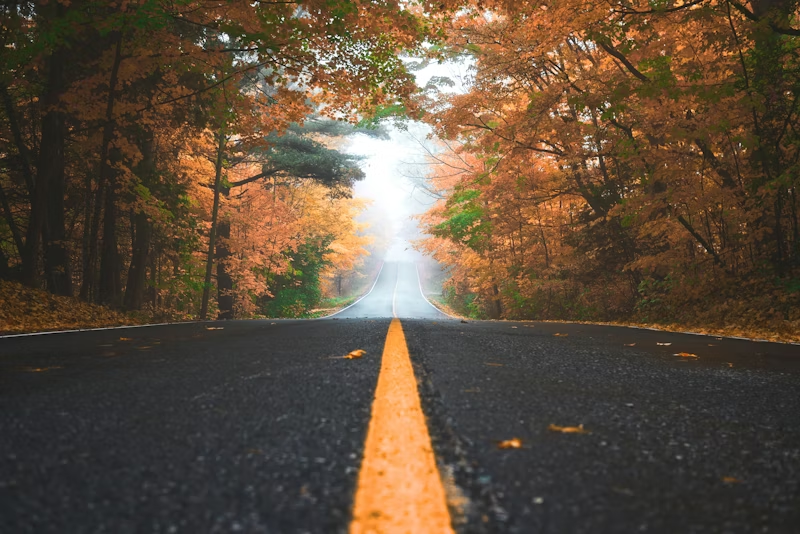
During the spring and summer, leaves serve as the food factories for trees. They contain a pigment called chlorophyll, which is essential for photosynthesis—the process of turning sunlight, water, and carbon dioxide into glucose. Chlorophyll is what gives leaves their vibrant green color. However, leaves also contain other pigments, such as carotenoids (which produce yellow and orange) and xanthophylls. Throughout the summer, the intense green of the chlorophyll masks these other colors. As the days become shorter and the temperatures drop in autumn, the tree receives a biological signal to prepare for winter dormancy. To save energy and protect itself from the cold, the tree begins to shut down its food factories. It grows a layer of corky cells, called an abscission layer, at the base of each leaf's stem. This layer slowly cuts off the flow of nutrients and water between the leaf and the rest of the tree. Without a steady supply of water and nutrients, the leaf stops producing new chlorophyll. Since chlorophyll is a relatively unstable molecule that breaks down quickly in sunlight, the existing green pigment disappears. As the green fades away, the yellow and orange pigments that were there all along finally become visible. This is why we see the sudden emergence of bright golds and ambers in the forest canopy.
Going Deeper
The brilliant reds and purples we see in some trees, like maples and oaks, involve a slightly different chemical process. These colors are produced by a class of pigments called anthocyanins. Unlike the yellows and oranges, anthocyanins are usually not present in the leaf during the summer. Instead, they are produced in the fall as the chlorophyll breaks down. When the abscission layer begins to block the veins of the leaf, sugars can get trapped inside. If the weather is bright and sunny during the day but cool and crisp at night, the high concentration of sugar and light triggers the production of anthocyanins. These red pigments may serve a protective purpose, acting as a kind of 'sunscreen' for the leaf as it transfers its remaining nutrients back into the tree's branches and trunk for storage. The timing and intensity of autumn colors are highly dependent on the weather. A late spring or a severe summer drought can delay the onset of color or cause leaves to drop early. The most spectacular displays occur when there has been a warm, wet spring, a favorable summer, and a fall filled with sunny days and cool (but not freezing) nights. Eventually, once all the nutrients have been reclaimed and the pigments break down, the leaves turn brown and the abscission layer finishes its job, allowing the leaf to fall gracefully to the ground. The tree then enters a state of rest, surviving on its stored glucose until the warmth of spring triggers the growth of new green leaves.
Did You Know?
Consider the difference between deciduous trees and evergreens. Evergreen trees, like pines and spruces, have needles that are coated in a heavy wax and contain antifreeze-like chemicals, allowing them to survive the winter without shedding their 'leaves.' Deciduous trees, however, have broad, thin leaves that would easily freeze and transpire too much water in the dry winter air, making the fall color change a necessary part of their survival strategy. Another interesting example is the 'Larch' tree. Larches are unique because they are conifers (like pines) but they are also deciduous. Every autumn, their soft green needles turn a brilliant, glowing gold before falling off entirely, making them a rare bridge between the two types of trees. These variations show how different species have adapted unique chemical and biological paths to handle the changing seasons.