The Question
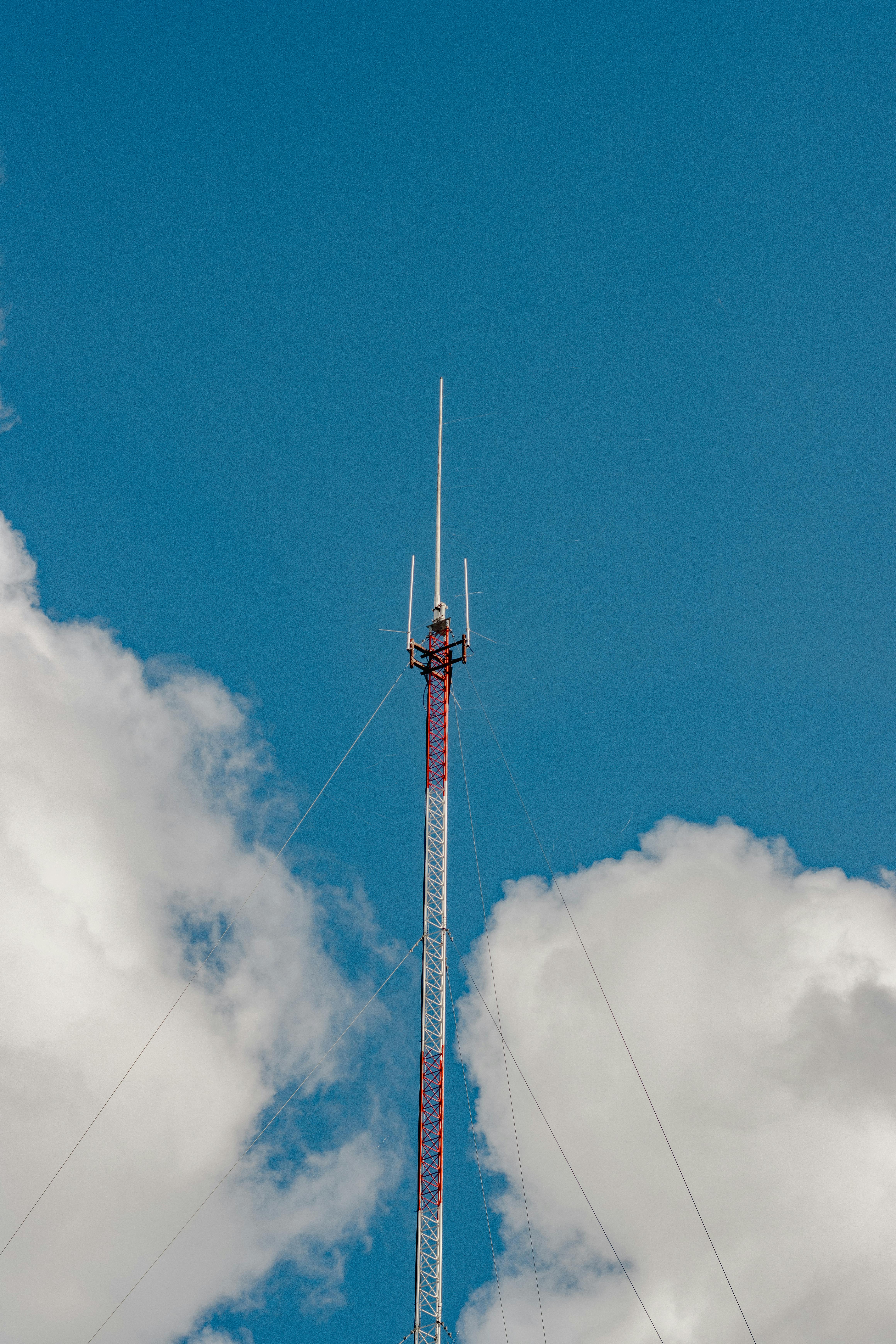
What causes the sky to appear blue during the day instead of other colors? This is one of the most fundamental questions about our world, yet the scientific explanation involves a complex interplay of light, atmosphere, and human biology. Why don't we see a violet sky, or a black one like we see from space?
Detailed Explanation
The primary reason the sky appears blue is a phenomenon called Rayleigh scattering. This process begins when sunlight, which is composed of all the colors of the rainbow, hits Earth's atmosphere. Sunlight travels as waves of different lengths. Red light has longer, lazier waves, while blue and violet light have much shorter, choppier waves. When these waves encounter the gas molecules in our atmosphere—primarily nitrogen and oxygen—they interact differently. The smaller gas molecules are much more efficient at scattering shorter wavelengths. Because blue waves are short and frequent, they strike these molecules and get scattered in every direction across the sky. This is why when you look up away from the direct sun, your eyes are catching this redirected blue light coming from every corner of the upper atmosphere. You might wonder why the sky isn't violet, since violet light has even shorter wavelengths than blue and scatters even more intensely. The answer lies in two factors: first, the sun emits significantly more blue light than violet light; and second, the human eye is much more sensitive to blue than it is to violet. Our eyes interpret the mixture of scattered violet and blue light simply as pale blue. Furthermore, the higher altitude atmosphere absorbs some of the violet light before it reaches our eyes. As the sunlight passes through more and more atmosphere, the blue light continues to be scattered away, which is also why the sky near the horizon often appears paler or even white—the light has been scattered so many times in so many directions that it becomes a mix of many colors again. This intricate dance of physics and biology creates the beautiful blue canopy we see every clear day.
Going Deeper
To understand the depth of this effect, we must consider the composition of the atmosphere itself. The atmosphere isn't just a void; it's a dense sea of gases and particles. Each nitrogen molecule acts like a tiny obstacle for the incoming solar radiation. When the sun is directly overhead, the light has the shortest path through the atmosphere, resulting in the brilliant blue we associate with noon. However, as the sun moves toward the horizon during sunset or sunrise, the light must travel through a much greater volume of air. By the time the light reaches your eyes, most of the blue and violet light has been scattered away entirely, leaving only the longer wavelengths like red, orange, and yellow to pass through. This is why the sky changes color at the end of the day. Without our atmosphere, the sky would look like it does from the moon: a stark, eternal black, because there would be no molecules to scatter the sunlight and create a sense of color in the void. Rayleigh scattering is named after the British physicist Lord Rayleigh, who published the mathematical description of this effect in the 19th century. His work proved that the intensity of scattered light is inversely proportional to the fourth power of the wavelength. This means that blue light (with a wavelength around 450 nanometers) is scattered about 10 times more efficiently than red light (around 650 nanometers). This mathematical certainty is the reason why our world is bathed in blue.
Did You Know?
Think of the atmosphere as a giant filter. If you were to shine a white light through a container filled with slightly soapy water, you would see a blue tint from the side. The soap particles scatter the blue light just like the gas molecules in the air. This is a perfect miniature demonstration of the same principles that govern our entire planet's appearance. Another fascinating example is the 'Tyndall effect,' which explains why some people have blue eyes. There is actually no blue pigment in human eyes; the blue color is caused by the scattering of light in the stroma of the iris, similar to how the sky gets its color.