The Question
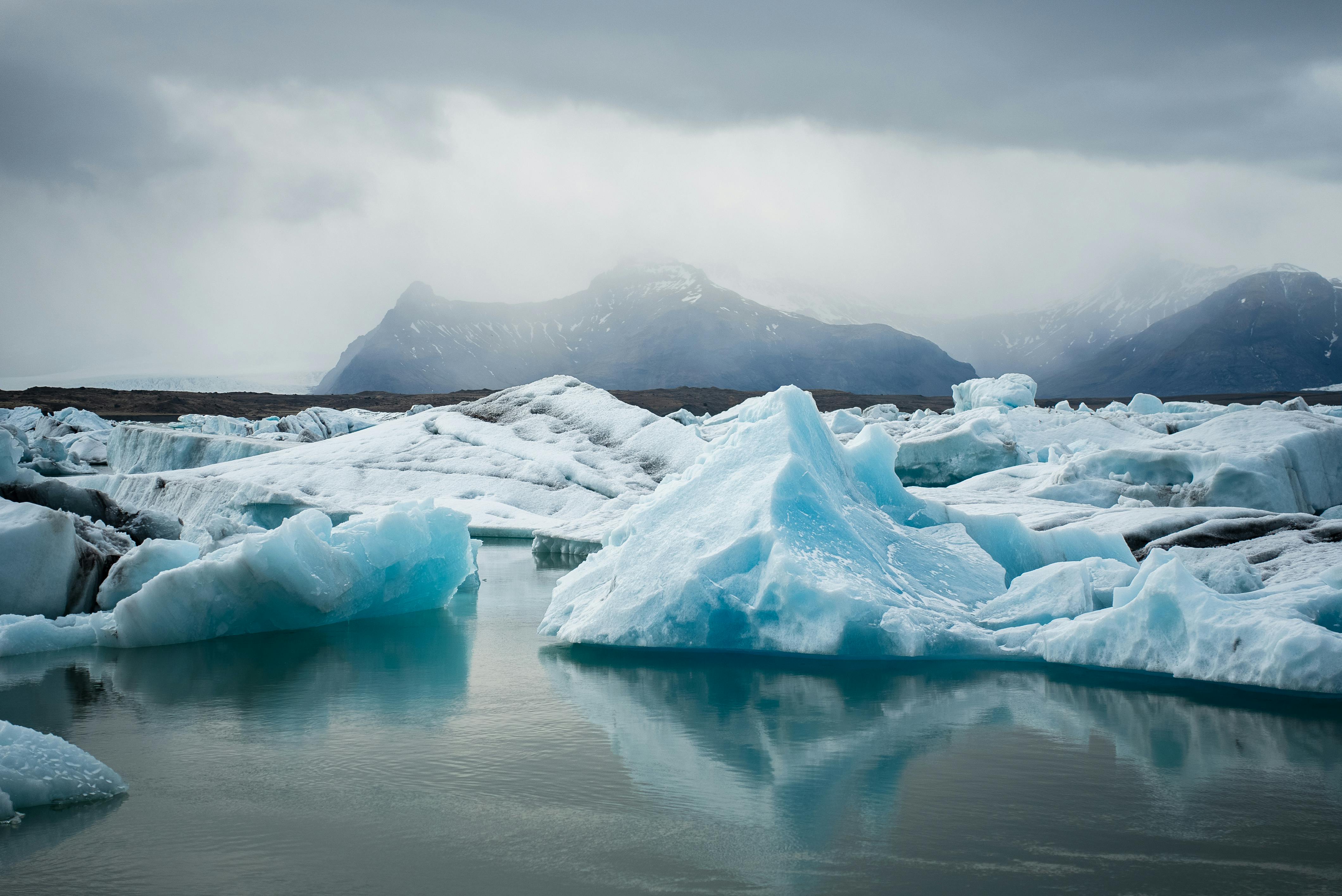
In almost every other substance on Earth, the solid form is denser than the liquid form and sinks. However, water breaks this rule. Why is it that ice cubes float in your glass, and massive icebergs stay on top of the ocean? The answer lies in the unique molecular structure of water and its unusual behavior as it cools.
Detailed Explanation
To understand why ice floats, we have to look at how water molecules interact with each other. A water molecule (H2O) is made of one oxygen atom and two hydrogen atoms. These molecules are 'polar,' meaning they have a slight positive charge on one side and a slight negative charge on the other. This creates 'hydrogen bonds' between the molecules, making them stick together. In liquid water, these molecules are constantly moving, bumping into each other, and breaking and reforming their bonds. They stay relatively close together, packed in a somewhat disorganized but dense fashion. However, as the temperature drops toward the freezing point (0°C or 32°F), the molecules begin to slow down. When water freezes, the molecules no longer have enough energy to break their hydrogen bonds. Instead, the bonds force the molecules into a very specific, rigid, and organized hexagonal lattice structure. This structure is the key: to maintain this hexagonal shape, the molecules must actually move further apart than they were in the liquid state. They lock into place with a significant amount of empty space between them. Because the same number of molecules now occupies a larger volume, the density of the ice decreases. Specifically, ice is about 9% less dense than liquid water. According to Archimedes' principle of buoyancy, any object that is less dense than the fluid it is in will float. Therefore, ice stays on the surface of the water, creating the familiar sight of floating cubes or massive polar caps.
Going Deeper
This unusual property of water is actually a vital prerequisite for life on Earth as we know it. Most substances reach their maximum density at their freezing point, but water reaches its maximum density at 4°C (39.2°F). As water cools below 4°C, it starts to expand and become less dense. In the natural world, this means that when a lake or pond begins to freeze in winter, the coldest water and the resulting ice stay at the top. The ice forms an insulating layer on the surface. This layer of ice acts like a thermal blanket, trapping the heat in the water below and preventing the entire body of water from freezing solid. If water behaved like most other liquids, ice would form and sink to the bottom, eventually filling the entire lake from the bottom up and crushing or freezing all the aquatic life inside. Because ice floats, fish, plants, and other organisms can survive in the liquid water beneath the frozen surface throughout the coldest months. This 'anomaly' of water is also responsible for geological processes. When water seeps into cracks in rocks and then freezes, its expansion creates immense pressure—up to 30,000 pounds per square inch—which can split solid rock apart. This process, known as frost wedging, is a major force in the erosion and shaping of our planet's landscapes. The density difference is also why pipes can burst in winter if they are not properly insulated; the water inside freezes and expands, eventually overcoming the strength of the metal or plastic pipe.
Did You Know?
Consider the scale of an iceberg. Because ice is roughly 91% as dense as seawater, about 90% of an iceberg's mass is hidden below the waterline. This is the origin of the phrase 'the tip of the iceberg.' Even though the majority of the ice is submerged, the small difference in density is enough to keep millions of tons of ice afloat. Another interesting example can be seen in your own kitchen. If you fill an ice cube tray to the very brim with water, the resulting ice cubes will bulge out above the top of the tray. This is a direct, visible demonstration of the 9% expansion that occurs during the freezing process. If you were to try the same experiment with liquid wax or oil, the solid form would actually shrink and leave a depression in the center, highlighting how rare and special water's behavior truly is.